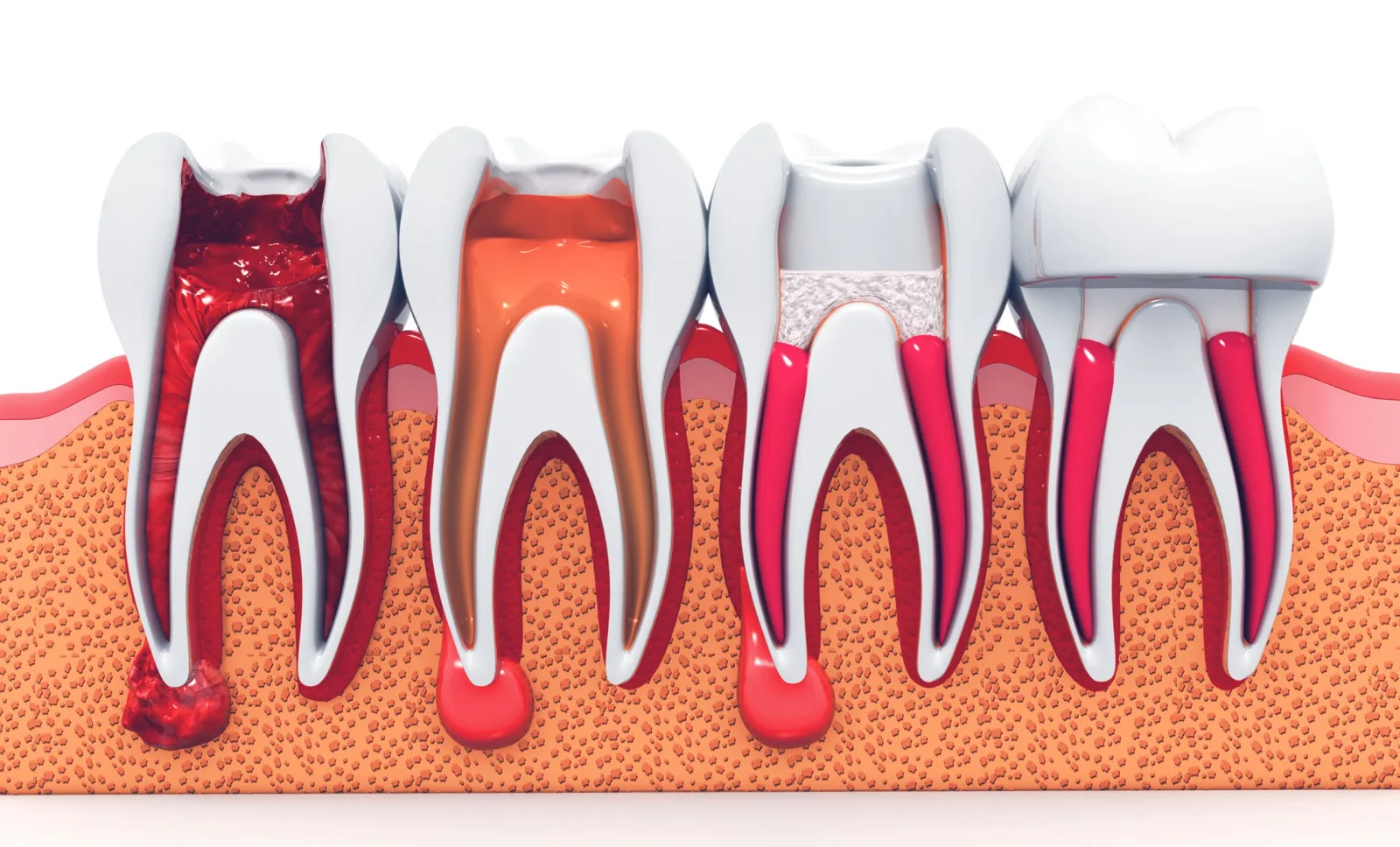

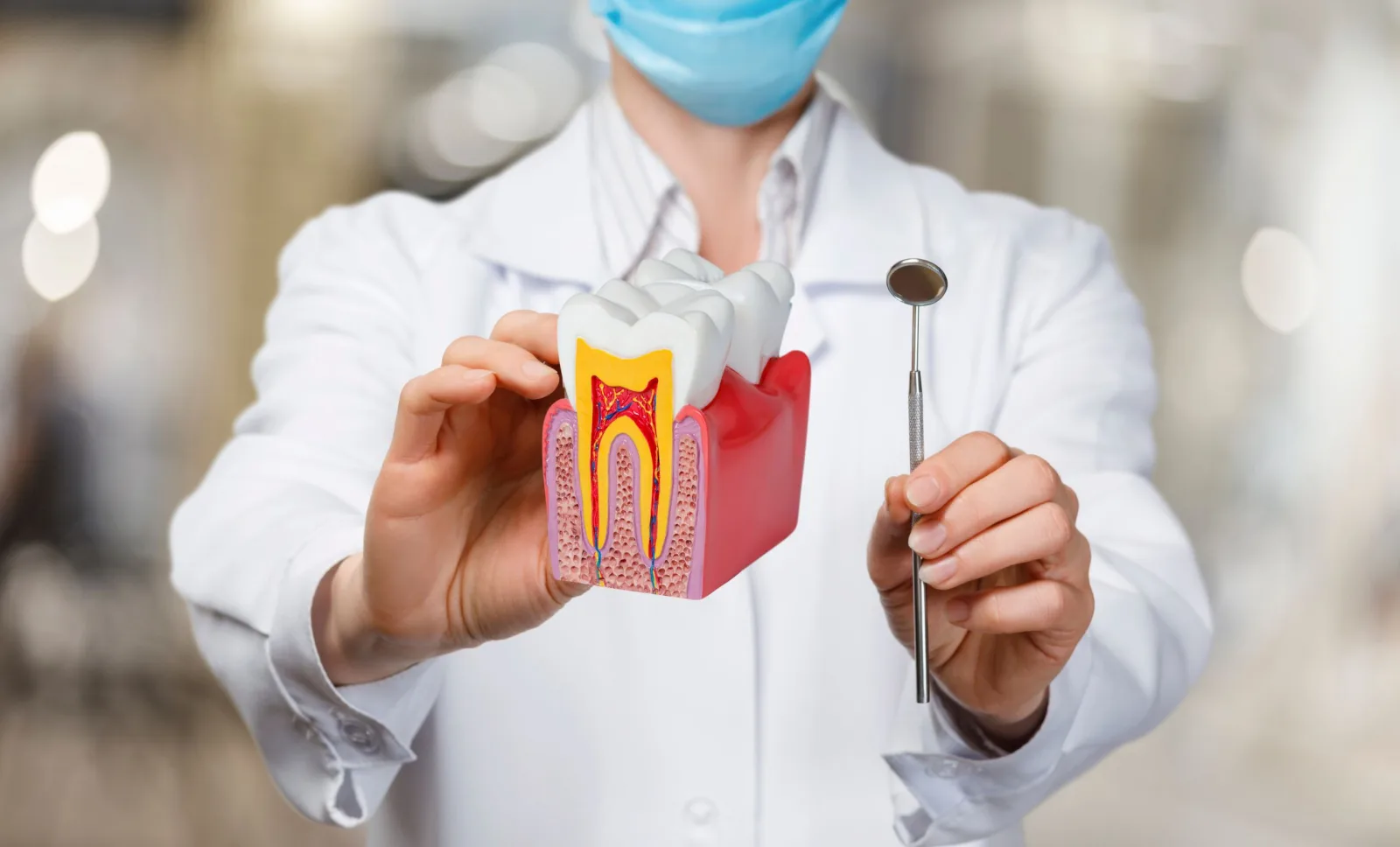
A root canal saves a tooth whose nerve has been damaged by deep decay, a crack or an old filling — the inflamed pulp is removed, the canals inside the roots are cleaned and sealed, and the tooth stays right where it belongs.
At Prasanna Dental Care, root canals are performed by Dr. Arpit Chaudhari, a micro endodontist — meaning your treatment happens under magnification, where every extra canal is found and every bit of healthy tooth is preserved.
When a tooth is asking for help
Lingering sensitivity — Hot or cold that keeps aching after the trigger is gone.
Pain on biting — A sharp or dull ache when you chew from one side.
Swelling or a gum boil — A pimple-like bump near the tooth that comes and goes.
A darkened tooth — Deep decay or an injury can quietly damage the nerve inside.
What happens during your treatment
Comfort first — Gentle anaesthesia and isolation — most patients compare the sitting to getting a filling.
Cleaning and shaping — The infected pulp is removed and each canal is disinfected under magnification.
Sealing — The canals are filled and sealed so bacteria can never return.
Protection — A crown restores the tooth's full strength — and your bite.
Why the microscope changes everything
Nothing gets missed — Extra canals invisible to the naked eye are found and treated — the most common reason root canals fail elsewhere.
More tooth preserved — Magnification means smaller, more precise access — keeping your natural tooth strong.
Fewer sittings — Most treatments finish in one or two comfortable visits.
Higher success — Precision today means a tooth that quietly serves you for decades.